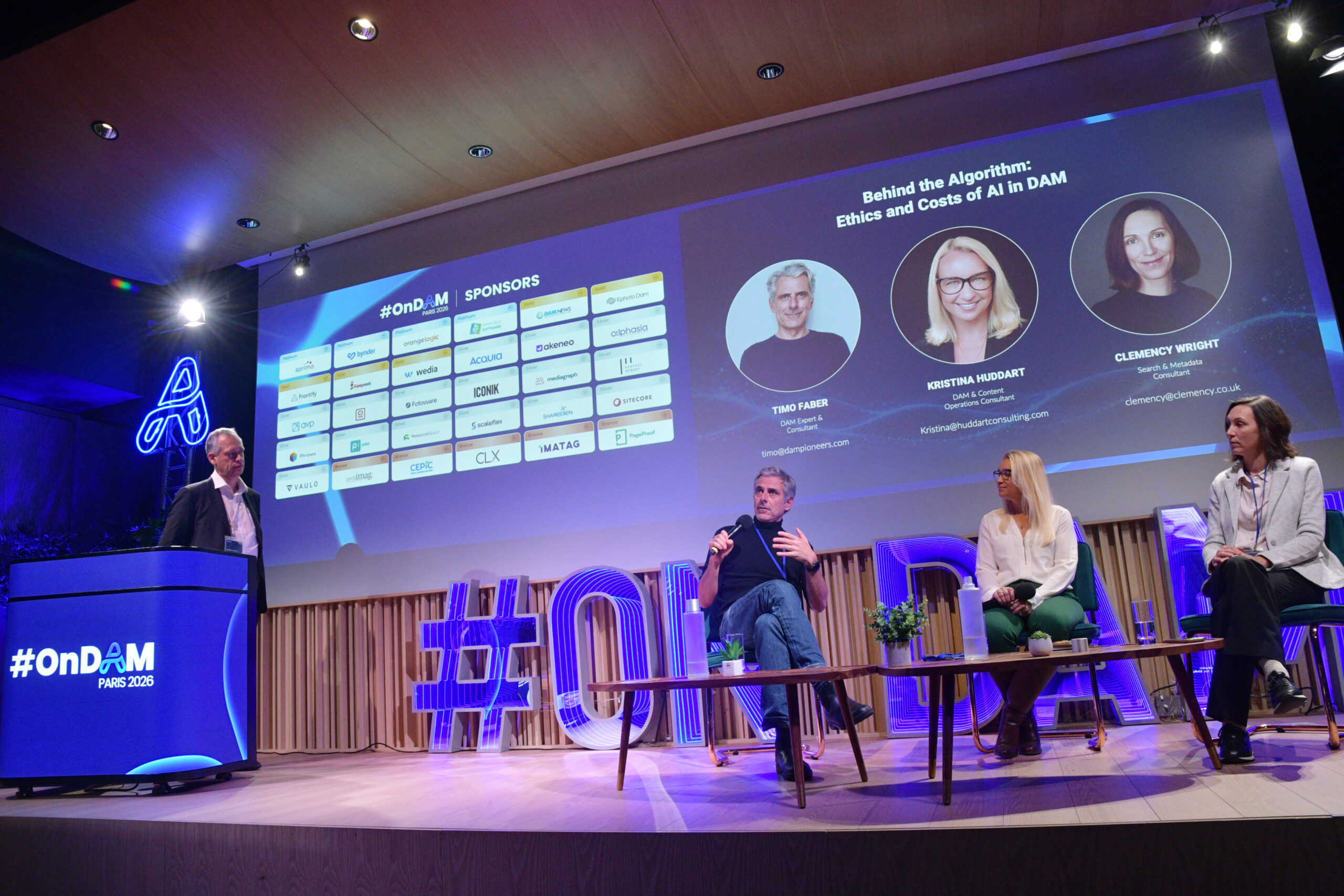
Costs and Ethics of AI in DAM
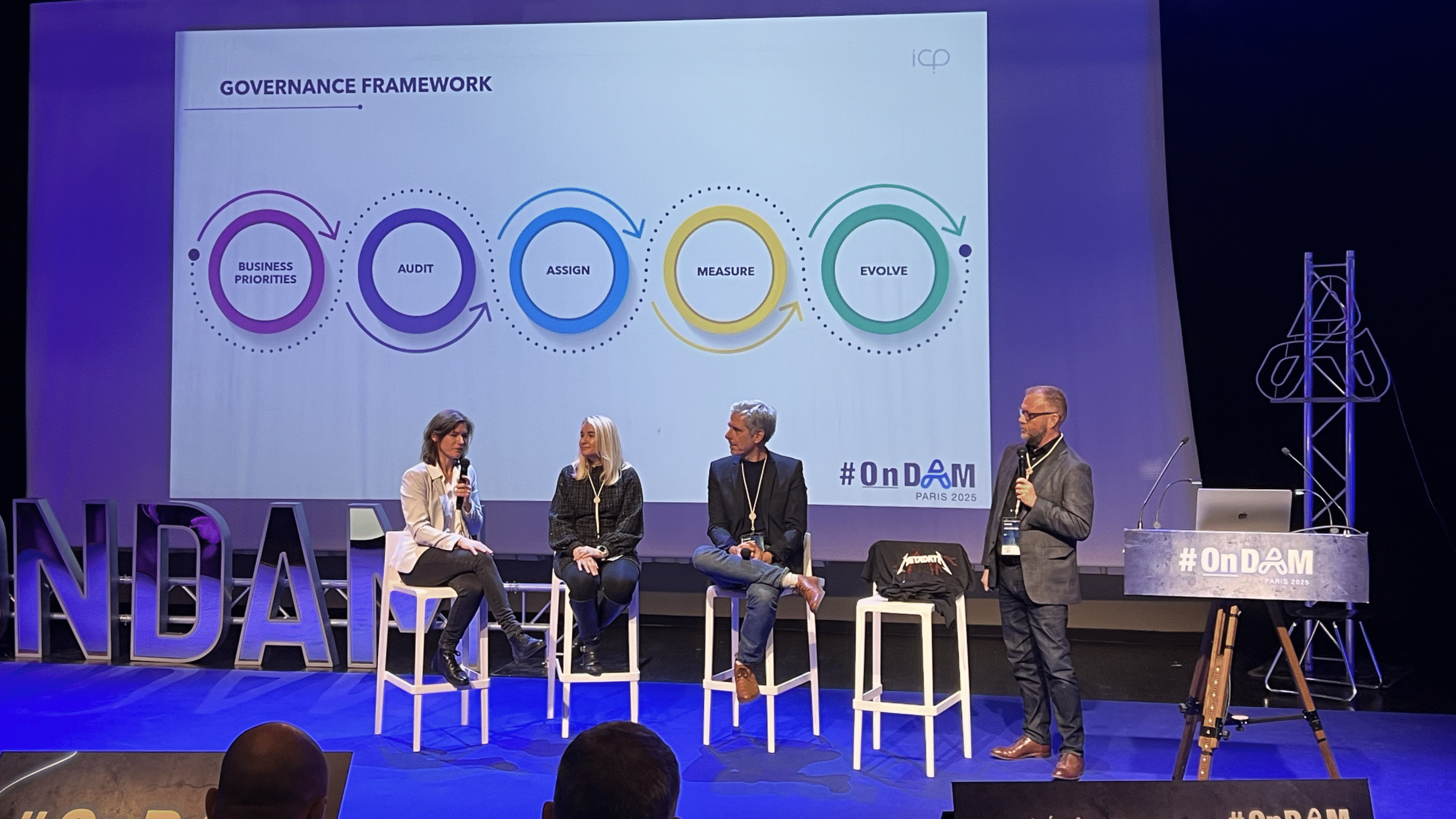
Two days in Paris showed that the DAM industry is no longer asking what AI can do. It is asking what AI is worth, and what it costs. At OnDAM Paris 2026, held on 17 and 18 November at Comet Bourse, vendors, practitioners and consultants met for Europe’s largest conference dedicated to Digital Asset Management. For Timo Faber, independent DAM consultant and founder of dampioneers, it was his third OnDAM and his first time on the main stage, as part of a panel on the ethics and costs of AI in DAM.
AI has grown up
AI, together with content authenticity and provenance, dominated the conversations, but the tone has changed. The experimental phase is largely over. Vendors and customers alike are now focused on where AI creates real business value for the people who work with a DAM every day.
At the same time, AI is changing how DAM software itself is built. Vendors can now address customer requirements at a speed and depth that would have been unthinkable a few years ago. Features such as AI-based smart derivative generation and the ability to manage and secure content after it has left the DAM are moving from the roadmap into the product.
Content credentials are following a similar path. The C2PA standard is being adopted, and DAM vendors have started to work out how to build credential management into their user interfaces. This positions the DAM as the trust and governance hub for an organisation’s content.
The price tag nobody can read
Faster development and smarter features have a downside: AI does not come for free, and its pricing is anything but transparent. Someone has to pay the bill, either the DAM vendor or the customer. It is certainly not the model providers.
This was the focus of the panel discussion between Timo Faber, Kristina Huddart and Clemency Wright. One problem is that AI costs vary enormously by feature. Metadata translation or natural language search is often included in the licence. Video analysis and large-scale format transformations are typically billed by consumption. On top of that, model providers price their services in tokens, a unit that is not standardised across models and means very little to a DAM manager trying to budget for the year. What does “$1 per 1 million tokens” actually tell you about the cost of transcribing 100 hours of video? Very little. Vendors struggle to pass these costs on in a fair way, and buyers struggle to understand what they are signing.
The panel also looked beyond money. When AI writes metadata, liability usually stays with the organisation using the system, not with the vendor. That makes governance essential: deciding which fields AI may write, marking AI-generated content, and keeping a human in the loop for anything sensitive. AI can help fix metadata problems, but only if the underlying data is in good shape. Otherwise it simply produces bad metadata faster. And as AI takes over routine tasks, the role of the DAM manager is becoming more strategic, shifting toward taxonomy design, agent configuration and process ownership.