
Executive Summary
When Microsoft announced the retirement of Azure Media Services (AMS), our client, a global leader in outdoor power equipment, faced a critical infrastructure threat. With thousands of product videos driving conversion on their Product Detail Pages (PDPs) and a hard deadline of six months, the clock was ticking. The complexity? Legacy QR codes printed on physical product packaging.
dampioneers was brought in to manage the end-to-end migration, ensuring that while the underlying technology changed, the customer experience and the scanning of millions of printed codes remained seamless.
The Initial Ecosystem
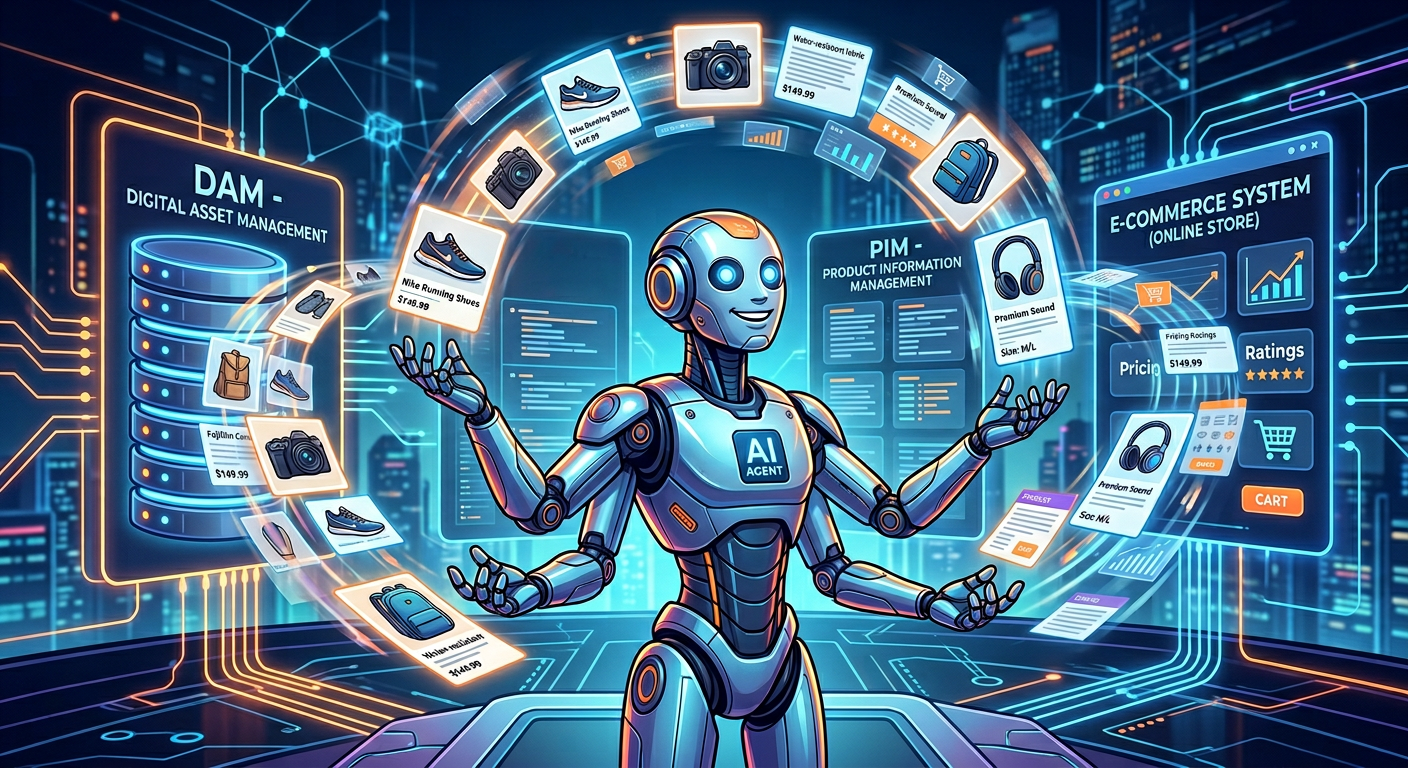
Before the project commenced, the client operated a robust but highly dependency-driven video workflow tailored to the demands of high volume e-commerce. Product videos were ingested into a central Digital Asset Management (DAM) system and, once approved, exported to an CDN powered Azure Blob storage container. Exported Video assets were then handed over to Azure Media Services for processing.
There, adaptive bitrate streaming outputs such as HLS and DASH were generated to ensure optimal playback across devices. The resulting streaming links were then written back into the DAM and ultimately published to the e-commerce product detail pages, completing an end-to-end workflow that, while powerful, relied on several tightly coupled systems.
The Challenge: The Azure Sunset & The “Physical” Problem
The announcement that Microsoft was sunsetting AMS created an immediate crisis. The project required a total replacement of the video streaming engine, but two factors turned this into a “Red Alert” scenario:
The 6-Month Hard Deadline: The entire project—including stakeholder interviews, vendor selection, contracting, and technical implementation—had to be completed within half a year to avoid service blackout.
The Legacy QR Code Trap: The client had millions of products already in the supply chain or in customers’ hands. The packaging featured printed QR codes encoding the specific streaming URLs generated by the old AMS system.
The Risk: If the backend service was shut down, those QR codes would result in “404 Not Found” errors, damaging brand reputation and frustrating customers.
Our approach
Phase 1: Discovery & Requirements
We conducted in-depth stakeholder interviews to understand not only the technical requirements, but also the underlying business needs driving the initiative. Through this process, it became clear that the new solution had to match or exceed the existing adaptive bitrate streaming capabilities, integrate seamlessly with the current DAM through a flexible and well-documented REST API, and provide a robust mechanism to intercept and resolve legacy URL requests to ensure continuity for existing assets and consumers.
Phase 2: Vendor Selection & Architecture
We scanned the market for AMS replacements. Rather than just picking a video platform, we selected a solution capable of high-volume API handling.
The “Magic Trick” for QR Codes: We architected a Redirect / Resolution Layer. We designed a solution where calls to the old AMS patterns were intercepted and mapped to the new video service’s unique identifiers. This ensured that a customer scanning a box printed two years ago would unknowingly trigger the video from the new streaming provider.
Phase 3: Implementation & Migration
As part of the implementation, we orchestrated the batch migration of the existing video library to the new provider and rebuilt the integration layer between the DAM and the new video service to automate all future uploads. This was complemented by rigorous load and performance testing to validate that the new resolution layer could reliably handle peak traffic volumes without introducing latency or degrading the end-user experience.
The Outcome
Despite an aggressive timeline, the project was delivered on schedule and within budget. The transition from Azure Media Services to the new provider was executed seamlessly, with no downtime for end users. All existing links were fully preserved, ensuring that legacy QR codes continued to function without interruption by transparently redirecting requests to the new video source. At the same time, the upgraded video player delivered a noticeably improved experience, combining faster load times with richer analytics compared to the previous implementation.