use case and benefits
This list is very different depending on what vertical your organization is in. Advertising agencies have very different needs than brand owners or retailers. The purpose of this list is to provide some simple examples to help you understand how a DAM can benefit your organization.
Repurposing your assets
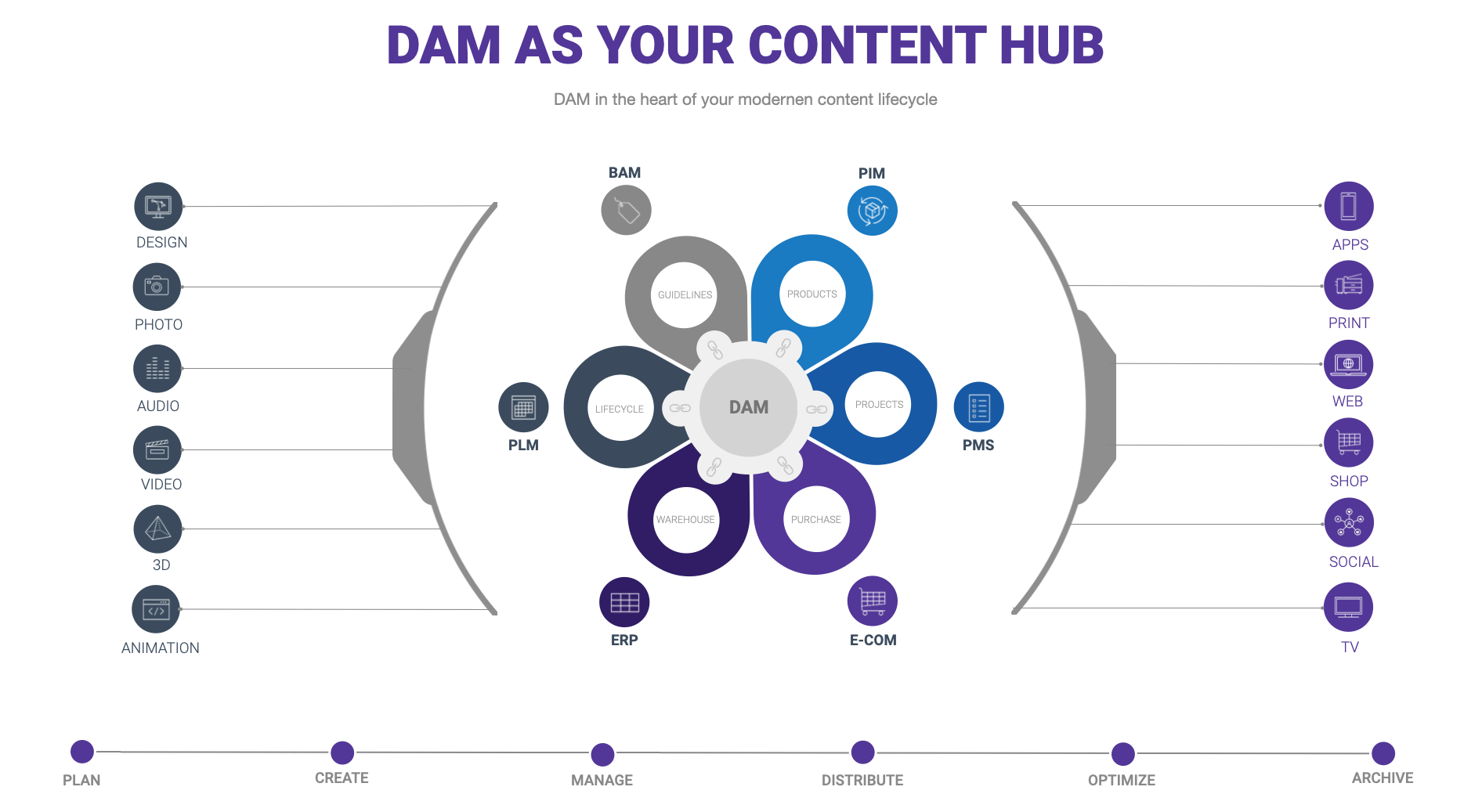
Any image or video asset stored in the DAM can automatically be converted or transformed into a target data format that is optimized for the corresponding channel (website, e-commerce, print, social media). Instead of generating countless copies of the same file for various target channels, DAM solutions generate renditions of a single approved master asset on-the-fly. This highly reduces costs, by avoiding external agencies charging for creating additional file formats, and eliminates the costly risk of human errors, by sending out a wrong version of an asset.
Digital Rights Management (DRM)
Digital rights management (DRM) of licensed content, such as image usage rights etc. is something your DAM solution may cover as well. You will be able to keep an overview about which users are allowed to use which assets in which geographical region, for which period of time and for which output channel, without the risk of causing high costs through copyright infringement.
Convenient and secure content sharing
Sharing data by sending email attachments is risky and unsecure. Apart from the fact that email was never thought of as a data delivery protocol, when it comes to managing attachments it is slow and errorprone, but most of all it is difficult to find the right asset (the one asset that is approved) in your inbox as well. In order to minimize the risk of publishing unapproved content, DAMs allow easy content sharing by automatically generating time bombed access links for internal and external users.
Design templates to localize content
Regional marketing managers in any geographical location have controlled access to localized marketing collateral provided to them for a specific period of time. Preconfigured design templates allow them to modify single components, such as images or price tags without the risk of violating brand guidelines. Depending on the DAM solution this could work with Adobe InDesign, Photoshop, Illustrator, Figma, Powerpoint, etc…
Manage external stakeholders
After photographers securely upload their photos to the DAM repository an automated process analyses the image content and generates descriptive metadata tags for the uploaded content. Once uploaded the marketing teams has immediate access to all images and team members could immediately start selecting photos for a particular purpose (e.g a ,marketing campaign). Picking and killing photos happens inside the DAM without having to download a single photo to review its content.
Customizable categories and filters
Finding the right asset is extremely easy thanks to configurable filters, browsable category trees and powerful search engines capable of searching any combination of filenames, text content, metadata tags and descriptions.
Review and approval of design files
Review and approval workflows with granular access permission and collaboration tools to annotate design and text content allows team members to quickly get a crasp on the progress of the approval process.
Securing brand consistency
In addition to managing assets, some DAMs manage brand guidelines as well. Designated areas, with text based guidelines about how a brand’s CI is supposed to be used, access to font libraries and color palettes etc. guarantees a CI-compliant handling and ensures the consistency of your brand.
Analysis and reporting
All actions that take place on the DAM system can be tracked automatically, evaluated and made available as reports, often visualized as user friendly data diagrams in a dashboard view and allow conclusions to identify what assets benefit other teams the most
Feeding assets to PIM, CMS or e-commerce systems
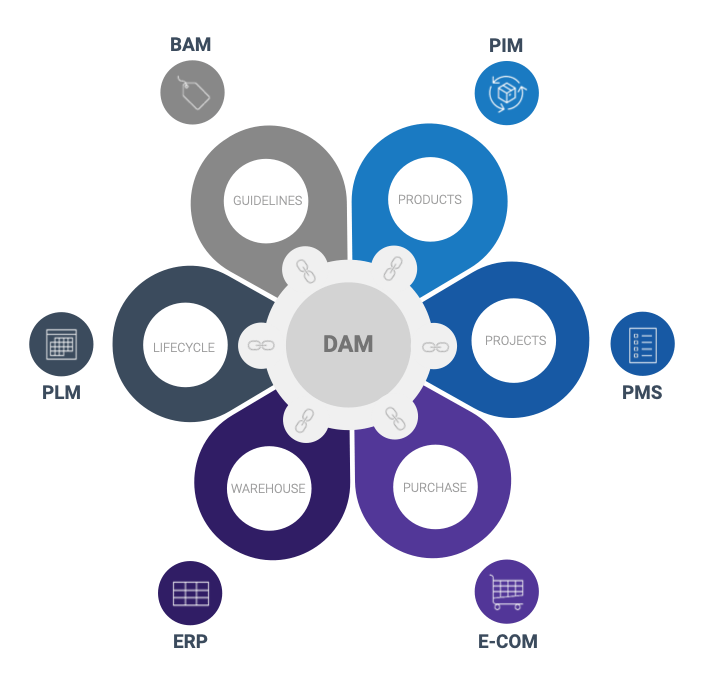
DAM systems are at the heart of the digital transformation in the marketing technology stack. As a central digital repository, DAM systems make sure existing solutions such as PIM, CMS or marketing automation systems are securely and consistently fed with the right digital content.
Layer of Trust
As AI-generated content becomes indistinguishable from authentic material, organisations need a system of record that can verify the origin, history and integrity of every digital asset. DAM systems are becoming that layer of trust, storing provenance metadata, maintaining a full audit trail of who created, modified and distributed each asset, and increasingly supporting emerging standards like C2PA (Coalition for Content Provenance and Authenticity). C2PA embeds cryptographically signed metadata directly into files, allowing any downstream system, or AI agent , to verify whether an image, video or document is authentic, unaltered and traceable back to its original source. For brands managing assets at scale, the DAM is the natural home for this provenance infrastructure.
Frequently Asked Questions
How do organisations benefit from a DAM system?
Key benefits include faster asset retrieval, elimination of duplicate asset creation, automated renditions for multiple channels, consistent brand governance, rights and usage tracking, and seamless integration with CMS, PIM and e-commerce platforms.
What is the ROI of a DAM system?
ROI from a DAI system comes from reduced time searching for assets, lower asset recreation costs, faster campaign production cycles and fewer brand compliance issues. Organisations typically see ROI within 12–18 months of implementation.
Who benefits most from a DAM system?
Marketing teams, creative agencies, e-commerce managers, brand managers and IT teams all benefit from DAM. It’s particularly valuable for large organisations managing assets across multiple brands, regions and output channels.