Get an outside perspective on your DAM
Based on our many years of experience, we have developed a list of functional descriptions to evaluate if a tested DAM system can be considered as such. We carefully verify that the described functions have been implemented as described.
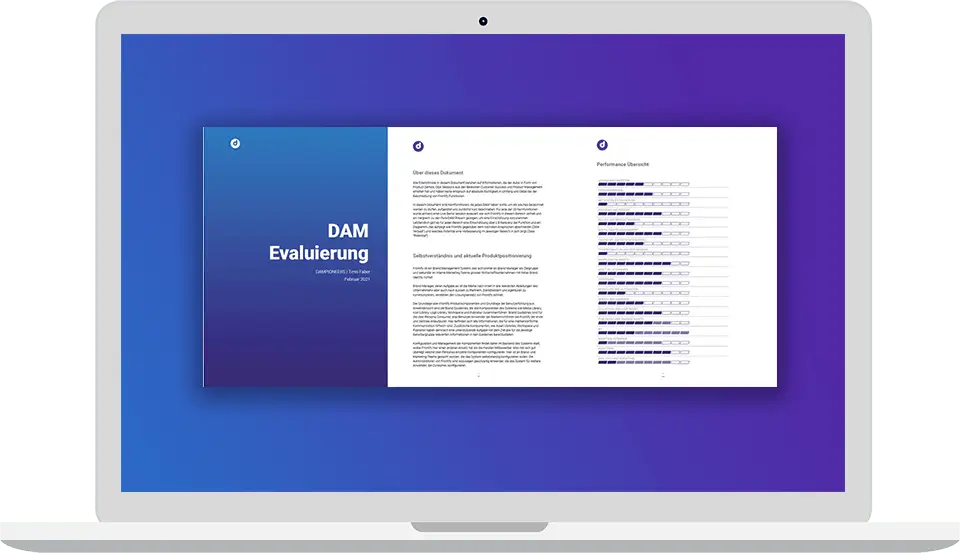
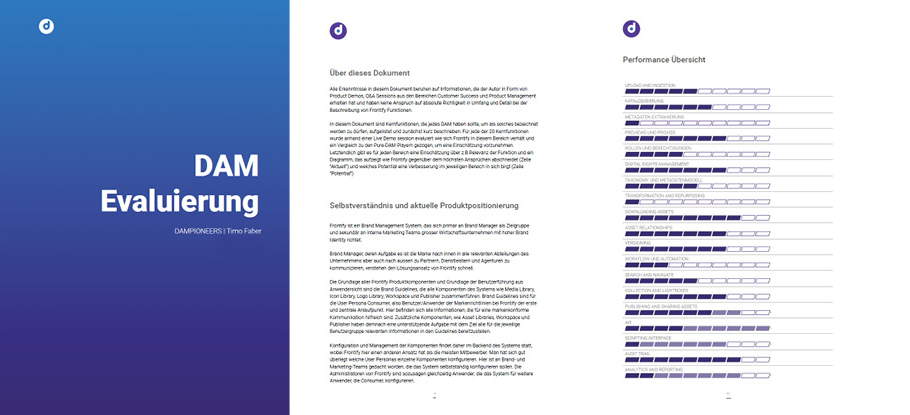
During our stress test, we conduct in-depth interviews with product teams, sales teams, and partner managers. We deliver a report that includes a function-specific ranking, our assessment, and an assessment of market positioning.
Our evaluation process does not include web forms. We believe that human interaction is the only way to truly gain a comprehensive understanding of the DAM solution, so it’s all about human interaction.
Functions tested in our DAM stress-test include the following
- Technology stack and underlying architecture (cloud-native or lift and shift)
- Data model
- Taxonomy and metadata models
- Deployment options
- API features and API documentation
- Migration options
- Cataloging options
- Brand portals
- Batch operations
- Upload and Ingestion
- Preview and Proxy generation
- Roles and permissions
- Digital Rights Management
- Transformation and Repurposing
- Asset Relationships
- Versioning
- Workflow and automation
- Search and Navigate
- Collections and lightboxes
- Publishing and Sharing assets
- Client application interfaces
- Audit Trail, Analytics, Reporting
- and more
Frequently Asked Questions
What is a DAM Stress Test?
A DAM Stress Test is an independent evaluation of a DAM vendor’s product conducted by dampioneers. It involves in-depth interviews with product, sales and partner management teams, resulting in a report with functional rankings and market positioning assessment.
Who is the DAM Stress Test for?
The DAM Stress Test is designed for DAM vendors who want an independent, expert assessment of their product — validating claims, identifying gaps and understanding their market positioning relative to competitors.
What does the DAM Stress Test report include?
The report includes a function-specific ranking, assessment of product claims versus actual capabilities, market positioning analysis and actionable recommendations for product and go-to-market improvements.